ECI launched the manifesto for safe and compliant European e-bike market
European Cycling Industries (ECI) launches Manifesto to combat non-compliant e-bikes and tampering kits.
Being successful in the bike business in Europe requires detailed knowledge of European laws and regulations for bicycles and bike products. Anti-dumping and anti-circumvention duties, CEN safety standards or the Generalized System of Preferences can have a huge impact on the success of a business. Here Bike Europe provides a comprehensive list of the current legislation and trade regulations in place, and important definitions.

European Cycling Industries (ECI) launches Manifesto to combat non-compliant e-bikes and tampering kits.

The summer holidays are over again. Last year, I wrote about my adventures with our car on the way to France. This time, we had the pleasure of spending our holiday in Curaçao, a Caribbean country within the Kingdom of the Netherlands and formerly part of the Netherlands Antilles. Because you can simply speak Dutch there - my native language - the Netherlands can feel surprisingly close. In reality, of course, it is very far away. Despite all the Dutch products on supermarket shelves, Curaçao is much more oriented towards the Americas. And from a product compliance perspective, that makes for some interesting discoveries.
No less than 10,000 e-bikes and e-scooters seized in the course of the European Public Prosecutor's Office (EPPO) investigation Calypso have been auctioned at bargain prices. According to EPPO, the sale generated €1.85 million, a small part of the financial effects from the ongoing investigation. "This is not what we want, and we would rather have them scrapped," said an EBMA spokesperson representing the European bicycle industry.

The UK will maintain its anti-dumping measures on bicycles and certain bicycle parts imported from China until August 2029, following the conclusion of a transition review. Duty rates will remain unchanged, ranging from 19.2% to 48.5%, with the measures intended to protect domestic manufacturers from a resurgence of low-priced Chinese imports.

The UK's bicycle industry has launched a new safety trust mark designed to help consumers identify compliant e-bikes while protecting reputable manufacturers and retailers from growing competition with illegal and unsafe products.
The United States Supreme Court decision to strike down US President Donald Trump's tariffs, followed by his swift executive order to implement new 10% tariffs, has thrown the global bicycle industry into disarray. In the wake of this political jockeying for control over imports and the billions of dollars they represent, European Union bike importers now face a complicated legal process to recover what they lost to the now-defunct IEEPA (International Emergency Economic Powers Act) tariffs.
No less than 10,000 e-bikes and e-scooters seized in the course of the European Public Prosecutor's Office (EPPO) investigation Calypso have been auctioned at bargain prices. According to EPPO, the sale generated €1.85 million, a small part of the financial effects from the ongoing investigation. "This is not what we want, and we would rather have them scrapped," said an EBMA spokesperson representing the European bicycle industry.
The UK will maintain its anti-dumping measures on bicycles and certain bicycle parts imported from China until August 2029, following the conclusion of a transition review. Duty rates will remain unchanged, ranging from 19.2% to 48.5%, with the measures intended to protect domestic manufacturers from a resurgence of low-priced Chinese imports.
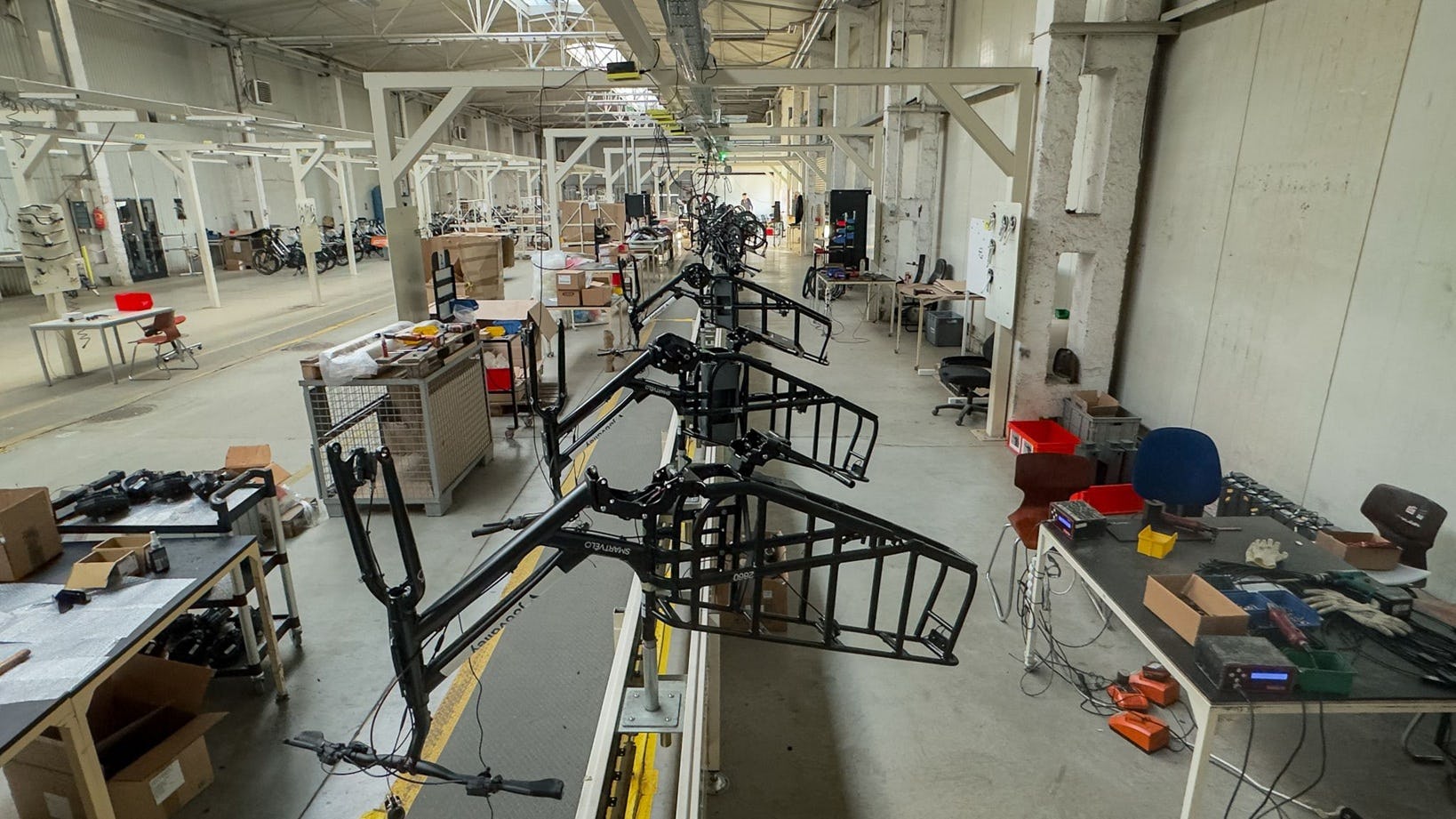
Singapore-based DuTech Holding Ltd. is rapidly snapping up a series of companies in the bicycle industry. As a global player in cash-handling machines (ATMs), the company is now also eyeing the bicycle industry, particularly in Europe. As the bicycle industry's financial position has remained weak since the aftermath of the pandemic, this strategic investor is a welcome guest for many companies.

BRUSSELS, Belgium - The European Commission announced that the European Union will continue to apply the existing import measures, such as import duties or anti-dumping measures on bicycles from China, as there is no valid reason to lift them. To prevent circumvention, the European Commission considers it necessary to apply these duties to all bicycles made in China, plus all shipments from seven countries. A total of 13 bicycle manufacturers across these countries are exempt from this measure.

TALINN, Estonia - "One of the most important mobility tools of our time, affordable, sustainable, and perfect for modern cities, is stuck in an analogue mindset. The cycling industry keeps polishing mechanical parts while the rest of the world has moved on," connectivity specialist Comodule wrote in a recent blog. The company laments at how e-bikes are creating a smoother commute, "but the bike itself is disconnected and largely dumb."

AMSTERDAM, the Netherlands - The e-bike is evolving rapidly and new user groups are entering the market, writes editor-in-chief Jan-Willem van Schaik in his editorial. "The question is whether the e-bike can keep the same classification and will continue to be seen as a bicycle. The classification as a bicycle has important legal implications."

While the long-awaited GPSR guidelines have finally appeared, offering disappointingly little clarity, the next regulation is already lining up for everyone involved in selling products in the EU: the Packaging and Packaging Waste Regulation (PPWR). The PPWR entered into force on 11 February 2025 and will start to apply from 12 August 2026, with many design and documentation obligations ramping up further between 2026 and 2030. Just as companies are still implementing the GPSR, the PPWR is already demanding attention.

As the dust settles after December 13, 2024 - of course you all know by now that's the date when the General Product Safety Regulation (GPSR) came into effect - numerous ambiguities remain. Flaws, gaps, and even loopholes are crying out for more clarity. At the time of writing this blog, we are still awaiting the European Commission's guidance document, which is expected to provide some of this much-needed clarity.